
Whale Economics in Sweepstakes Casinos: How 12% of Players Generate Billions in Revenue
 Available in GB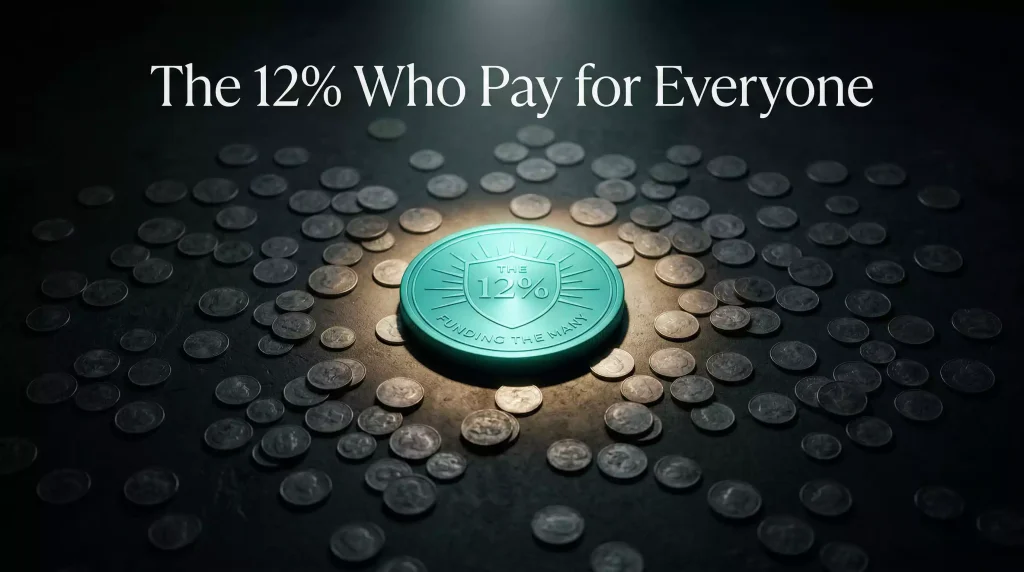
Only 12% of sweepstakes casino users ever make a purchase. The other 88% play exclusively on free coins — sign-up bonuses, daily logins, and AMOE entries. That 12% conversion rate generated an industry worth $10.6 billion in gross revenue in 2026. In licensed iGaming, where players deposit money into a regulated account, conversion rates exceed 50%. The gulf between 12% and 50% isn’t a flaw in the sweepstakes model. It is the model.
Sweepstakes casinos operate on freemium economics — the same revenue architecture that powers mobile gaming, streaming services with free tiers, and social media platforms. A massive free user base provides engagement, social proof, and a constant pipeline of potential converters, while a small minority of paying users funds the entire operation. In mobile gaming, the industry calls these high-spending users “whales.” In sweepstakes casinos, the 12% who pay for everyone are the whales whose spending patterns, motivations, and vulnerabilities define the industry’s economics and its ethical boundaries.
12% vs 50%: What the Conversion Gap Reveals
The 12% purchase rate tells you something fundamental about how sweepstakes casinos acquire and monetize their audience. In a traditional online casino, every registered player is a depositing player — you can’t play without funding your account. The conversion question is binary: did the player sign up and deposit, or didn’t they? In sweepstakes, the funnel is much wider and much leakier. Registration is free. Play is free. The purchase decision is optional and deferred, which means the platform must convert users from free engagement to paid engagement through ongoing experience rather than an upfront commitment.
The freemium parallel to mobile gaming is structurally precise. In mobile gaming, free-to-play titles like Candy Crush and Clash Royale typically see 2–5% of users making in-app purchases. The sweepstakes industry’s 12% conversion rate actually exceeds mobile gaming averages by a significant margin — likely because the redemption pathway (SC → cash) adds a financial incentive that pure entertainment apps lack. Players aren’t just buying virtual goods for enjoyment; they’re buying access to a system that can return real money. That financial motivation, absent in traditional mobile gaming, pulls more players across the purchase threshold.
The 88% who never purchase aren’t economically irrelevant — they serve critical functions within the ecosystem. Free players populate the platform, creating the sense of active community that makes the experience feel vibrant. They generate engagement metrics that the platform uses to attract new users and content providers. And they represent a perpetual conversion opportunity: every free player is a potential paying player, and the platform’s design — from bonus structures to login rewards to push notifications — is optimized to nudge free users toward their first purchase. The 12% conversion rate isn’t static; it’s the current output of a finely tuned conversion engine that runs continuously.
What makes the sweepstakes conversion rate particularly notable is the ARPPU (Average Revenue Per Paying User) that the 12% must generate to support a $10.6 billion market. If 12% of users pay and the industry generates $10.6 billion in gross purchases, the average paying user spends significantly more than their counterpart in mobile gaming or social casino. The math requires either a very large user base (tens of millions) or a very high per-user spend among the paying minority — or, most likely, both. The whale economics aren’t just about how many people pay. They’re about how much the payers spend, and whether that spending is sustainable or extractive.
The Spending Profile: Who Pays, How Much, and How Often
The AGA’s player survey provides the most detailed public data on sweepstakes spending behavior. Among paying users, 80% spend money monthly and approximately 50% spend weekly. The frequency alone signals habitual engagement rather than occasional entertainment — a player spending every week has incorporated sweepstakes purchases into their regular financial routine.
The primary motivation is financial: 68% of sweepstakes players cite winning real money as their main reason for playing. This motivation interacts with the freemium structure in a specific way. Free play demonstrates the potential for real-money wins (SC balance increases during good sessions), creating a demonstrated experience of “winning” that purchasing can amplify. The conversion from free to paid often follows a session where the player wins SC and thinks: “If I had more SC to play with, I could reach the redemption threshold.” The purchase isn’t impulse — it’s the culmination of a designed experience that makes spending feel like a rational step toward a financial goal.
The demographic overlay adds a critical dimension. AGA data shows that 42% of sweepstakes players have household incomes below $50,000, and 38% have a high school diploma as their highest education. The 12% who purchase are drawn from this same population — which means the revenue funding a $10.6 billion industry comes disproportionately from lower-income, less-educated households. A player earning $40,000 annually who spends $200 monthly on Gold Coin packages is allocating 6% of their gross income to sweepstakes — a spending level that represents discretionary income for affluent households but a significant financial burden for lower-income ones.
The spending pattern among the most active purchasers — the whales within the whale cohort — is where the economics concentrate. Mobile gaming industry data consistently shows that the top 1–2% of paying users generate 50% or more of total revenue. If the same distribution applies to sweepstakes (and the freemium structure suggests it should), the industry’s revenue is even more concentrated than the 12% figure implies. A small number of very high spenders may be contributing a disproportionate share of the $10.6 billion — and the spending levels required to generate that concentration raise questions about the boundary between enthusiastic engagement and compulsive behavior.
The Ethical Weight of Whale Economics
The whale-driven model isn’t inherently exploitative — freemium economics power many legitimate businesses across multiple industries. But the combination of a gambling-adjacent product, a disproportionately lower-income user base, and the absence of regulatory oversight creates conditions where the model’s extractive potential is highest and its protective mechanisms are weakest.
VGW disclosed $2.83 billion in prize payouts during FY2024 — real money flowing from the company to players. That’s a significant redistribution, and it demonstrates that the system does produce winners. But the payout figure doesn’t tell you who receives those winnings or how they’re distributed. If prize payouts follow the same concentration pattern as revenue (top spenders winning more because they wager more), the net financial transfer may flow disproportionately among the same high-spending cohort, while lower-spending players fund the prize pool without proportionate recovery.
Responsible gaming tools, where they exist on sweepstakes platforms, are voluntary rather than mandatory. There are no spending limits imposed by regulation, no mandatory affordability checks, no centralized self-exclusion registry, and no obligation to identify or intervene with players exhibiting compulsive spending patterns. For the 12% who pay — and especially for the subset of that 12% who spend the most — the gap between voluntary and mandatory protection is the gap between a system that monitors for harm and one that doesn’t.
The 12% who pay for everyone aren’t making a mistake by definition. Many are adults making informed choices about discretionary spending. But the data — 42% earning under $50,000, 68% motivated by money, 80% spending monthly — draws a picture of a revenue model that extracts significant financial commitment from a population with limited financial cushion. Whether that extraction represents entertainment value or economic harm depends on the individual player’s circumstances, spending levels, and ability to absorb losses. The industry has no mechanism for making that distinction, and the freemium model has no inherent incentive to try.
Whale Economics in Sweepstakes Casinos — More on this topic at sweepstakes slot machines.
See also Pragmatic Play’s U.S. Sweepstakes Exit.