
Sweepstakes Casino KYC: What Identity Verification Involves and Why It Matters for Your Data
 Available in GB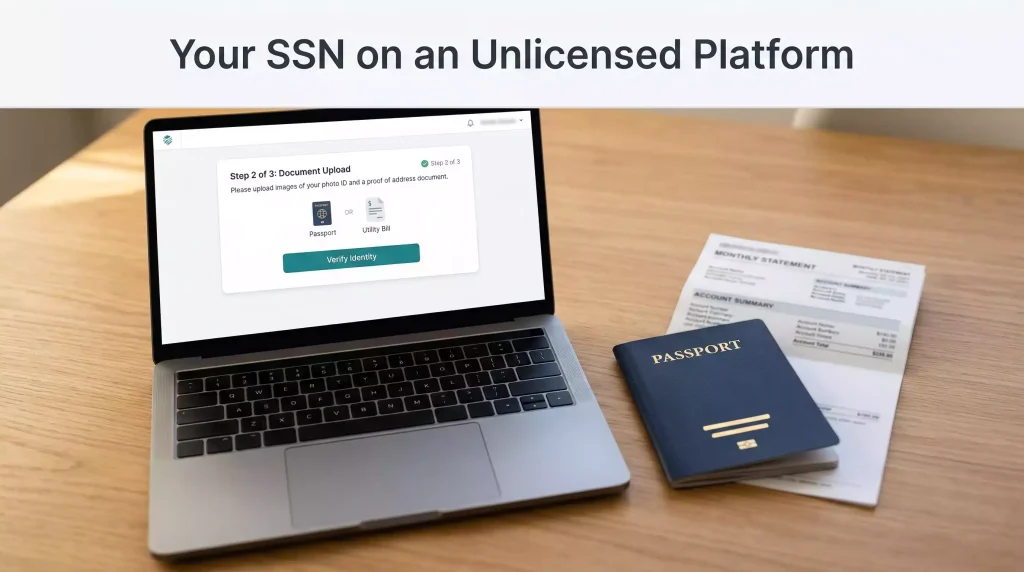
Account Security
Every sweepstakes casino requires Know Your Customer verification before you can convert Sweeps Coins to cash. The process collects some of the most sensitive personal information you possess — government ID, Social Security number, proof of address, sometimes a selfie with your documents. In a licensed iGaming environment, this data is handled under strict regulatory standards enforced by state gaming commissions. In a sweepstakes casino operating without a gambling license, the data protection standards are whatever the operator decides they are.
That distinction isn’t theoretical. It shapes the risk profile of every sweepstakes account that holds a redeemable balance. Your SSN on an unlicensed platform is a fundamentally different proposition than your SSN on a regulated one — and understanding exactly what KYC involves, what risks it creates, and how to mitigate those risks is practical knowledge that every sweepstakes player needs before submitting their first verification document.
What KYC Requires: Documents, Timing, and Process
KYC verification at sweepstakes casinos typically requires four categories of documentation, though the specific requirements vary by platform and sometimes by the size of the redemption being requested.
Government-issued photo identification is universal. A valid driver’s license, state ID card, or passport satisfies this requirement. The document must be current (not expired), clearly legible in the submitted image, and show your full legal name matching the name on your platform account. Some platforms accept only U.S.-issued documents; others accept international passports for players in U.S. territories or military bases overseas.
Social Security number is required by many — though not all — sweepstakes platforms. Operators that issue 1099-MISC tax forms for redemptions above $600 need your SSN for IRS reporting. Even platforms that don’t currently issue tax documents sometimes collect SSN as part of their identity verification process, arguing that it enables more thorough fraud screening. The SSN requirement is the most sensitive element of KYC and the one that creates the most significant data security exposure.
Proof of residential address confirms that you live in a state where the platform operates. Acceptable documents include a utility bill, bank statement, or government correspondence dated within the last 60–90 days, showing your name and address. The address must match the state you selected during registration — a mismatch triggers additional review and can delay or block the verification process.
Selfie verification — a photo of yourself holding your government ID — is an increasingly common additional step. The selfie is compared against the photo on the ID to confirm that the person submitting the documents is the same person who owns them. This biometric check adds another layer of personal data to the platform’s collection: your face, linked to your ID, linked to your SSN, linked to your financial transactions on the platform.
Timing matters. Most platforms don’t require KYC until you request your first redemption, which means you can play for days, weeks, or months before the verification question arises. Some platforms offer optional early verification — completing KYC before you have a cashable balance — which eliminates the delay when you’re ready to withdraw. The tactical advantage of early verification is real, but it requires submitting your sensitive data before you’ve had a chance to fully evaluate the platform’s trustworthiness through extended use.
The Data Risk: Your Identity on an Unregulated Platform
In licensed iGaming states, operators must comply with data protection requirements specified by their gaming commission. These requirements typically include encryption standards for data in transit and at rest, access controls limiting which employees can view player data, breach notification obligations, and retention policies governing how long data is stored after an account is closed. Violations can result in license suspension or revocation — a financial penalty severe enough to ensure compliance.
Sweepstakes casinos operate outside this framework. They may voluntarily adopt strong data protection practices — and some do. But they’re not required to, and no gaming regulator audits their compliance. The data protection standards that apply are general consumer privacy laws: CCPA in California (before the ban), state-level data breach notification statutes, and whatever the platform commits to in its privacy policy. These protections are meaningful but significantly weaker than gaming-specific data regulations, and enforcement depends on the player filing a complaint rather than a regulator conducting proactive oversight.
The 100+ class-action lawsuits filed against sweepstakes operators in 2026 included allegations related to data handling. Some suits allege that platforms shared player data with third-party marketing partners without adequate disclosure. Others allege insufficient protection against unauthorized access. The volume of litigation doesn’t prove systemic data mishandling, but it indicates that enough players have experienced data-related concerns to fuel a significant legal response.
Brian O’Dwyer, Chairman of the New York State Gaming Commission, described sweepstakes platforms as “unscrupulous, unsecure, and unlawful” in the AG’s press release announcing enforcement action. The “unsecure” characterization — from the chair of a state gaming commission — signals a regulatory view that sweepstakes platforms present data security risks that licensed operations do not. Whether that assessment applies to all platforms or only to the worst actors, the concern highlights a structural vulnerability: when you submit your SSN to an unlicensed platform, you’re trusting a business that no government entity has vetted for data security competence.
Protecting Your Data: Practical Steps
The data risks associated with sweepstakes KYC can’t be eliminated — verification requires sensitive information, and there’s no way around that. But the risks can be managed through deliberate practices that create buffers between your personal data and potential exposure.
Review the platform’s privacy policy before submitting KYC documents. Look specifically for: what data is collected, how it’s stored (encryption standards), who it’s shared with (third-party processors, marketing partners), how long it’s retained after account closure, and what your rights are regarding data deletion. A privacy policy that’s vague on these points — or one that reserves broad rights to share your data — should lower your confidence in the platform’s data handling practices.
Use a dedicated email address for sweepstakes accounts. This isolates your sweepstakes activity from your primary inbox, reducing the impact of a potential data breach. If a platform’s user database is compromised, the exposed email address leads to a sandboxed account rather than your primary digital identity.
Submit KYC only to established platforms with visible corporate identities, third-party security certifications (SSL, PCI DSS), and a track record of processing redemptions. New platforms with no operating history, no identifiable parent company, and no security credentials deserve the highest level of skepticism before you hand over your government ID and SSN.
Monitor your credit reports after completing KYC verification. Free credit monitoring services (AnnualCreditReport.com for annual reports, or Credit Karma for ongoing monitoring) allow you to detect unauthorized activity linked to your SSN. If a sweepstakes platform’s data is compromised and your SSN is exposed, credit monitoring is often your first line of defense against identity theft. Consider placing a credit freeze if you don’t anticipate needing new credit in the near term — it prevents anyone from opening accounts in your name, adding a layer of protection that no privacy policy can match.
Sweepstakes Casino KYC — More on this topic at sweepstakes slot machines.
See also Louisiana vs VGW and WOW Vegas.