
No Purchase Necessary: How the AMOE Rule Defines — and Divides — Sweepstakes Casino Legality
 Available in GB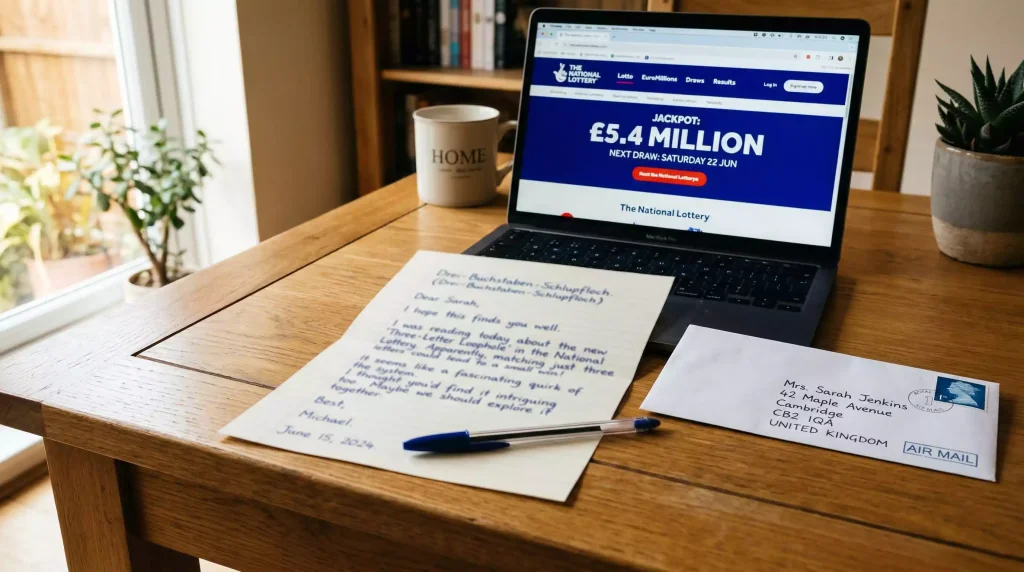
The entire legal framework of sweepstakes casinos rests on three words: no purchase necessary. Remove that principle and the model collapses into unlicensed gambling. Preserve it, and operators can argue — as they have, successfully enough to build a $10.6 billion industry — that their platforms are promotional sweepstakes, not gambling operations. The mechanism that makes “no purchase necessary” operationally real is AMOE: Alternative Method of Entry. It’s the free pathway through which players can obtain Sweeps Coins without spending money, and it’s simultaneously the legal cornerstone of the industry and the most contested element of its defense.
Whether AMOE actually removes the “consideration” element from sweepstakes casino play is the central question dividing the industry, its regulators, and the courts. The industry says yes — emphatically. Six state legislatures and multiple attorneys general say no — just as emphatically. Understanding the legal doctrine, how AMOE works in practice, and why critics reject the argument is essential for anyone trying to make sense of where sweepstakes casinos stand legally and where they’re headed.
Prize, Chance, and Consideration: The Three-Letter Loophole
Under most U.S. state laws, gambling requires three elements present simultaneously: a prize (something of value at stake), chance (the outcome is determined by luck rather than skill), and consideration (the player pays something of value to participate). If any one of those three elements is absent, the activity is legally not gambling. Sweepstakes casinos target the third element — consideration — and claim to remove it through the AMOE mechanism.
The legal logic traces back decades, long before online casinos existed. Promotional sweepstakes have been a feature of American marketing since at least the mid-20th century. McDonald’s Monopoly, Publishers Clearing House mailings, and gas station scratch-off promotions all operate on the same principle: you can enter to win a prize without buying anything. The “no purchase necessary” disclosure on these promotions isn’t a marketing courtesy — it’s a legal requirement that prevents the promotion from being classified as a lottery (which is illegal without state authorization) or as gambling.
Sweepstakes casinos extend this established promotional framework to online gaming. The argument, as articulated by the Social Gaming Leadership Alliance, is that their platforms “utilize established sweepstakes promotional frameworks which are distinct from gambling because they are designed to promote a bona fide service and always provide genuinely free participation methods through Alternative Methods of Entry.” In this framing, Gold Coins are the product being sold (a “bona fide service”), Sweeps Coins are the promotional incentive for purchasing that product, and AMOE ensures that players can participate in the sweepstakes without purchasing anything — thereby eliminating consideration.
The legal precedent supporting this position is genuine but narrow. Promotional sweepstakes law was developed for contexts where the sweepstakes was ancillary to a primary commercial activity — buying food at McDonald’s, subscribing to a magazine, filling up at a gas station. Sweepstakes casinos occupy a different space: the “primary product” (Gold Coins) has no utility outside the sweepstakes itself, the platform exists primarily to deliver the sweepstakes experience, and the promotional framing is the business model rather than a marketing overlay. Whether the established legal framework stretches to cover this application is the question that courts and legislatures are now actively resolving — with increasingly negative answers for the industry.
How AMOE Actually Works: Free Entry in Theory and Practice
AMOE takes several forms across sweepstakes platforms, all designed to satisfy the legal requirement that participation be available without purchase.
The most traditional form is the mail-in request. Players send a handwritten letter or postcard to a physical address specified in the platform’s terms and conditions, requesting free Sweeps Coins. The platform is legally obligated to honor the request and credit SC to the player’s account — typically 5 SC per letter, with limits on how many requests can be submitted per day or week. Processing times range from several days to several weeks. The mail-in AMOE is the oldest and most legally defensible form of free entry, because it requires no digital interaction with the platform and clearly involves no monetary exchange.
Digital AMOE options have emerged as alternatives. Some platforms offer online request forms where players can submit a free SC request through a web interface. Others distribute SC through social media giveaways, referral programs, or periodic promotional events. Daily login bonuses — small SC amounts (0.3–1.5 SC) credited for consecutive daily visits — function as a de facto AMOE, though their legal classification is less clear.
The practical reality is that AMOE exists but is rarely the primary pathway to SC accumulation. According to RG.org research, only 12% of sweepstakes casino users ever make a purchase. The remaining 88% play on free coins — sign-up bonuses, daily logins, and AMOE entries. But the 12% who do purchase generate the industry’s entire revenue. The free entry pathway exists, and a meaningful number of players use it, but the economic engine of sweepstakes casinos runs on purchases, not on AMOE.
The effort asymmetry between AMOE and purchasing is deliberate. Buying a Gold Coin package takes thirty seconds and a credit card. Obtaining the equivalent SC through mail-in AMOE requires writing a letter, buying a stamp, mailing it, and waiting days or weeks for processing. The legal requirement is satisfied — free entry is available — but the practical barriers ensure that most players who want meaningful SC volumes will choose the faster, easier path of purchasing. Whether this effort disparity undermines the “genuinely free” claim is a question that both regulators and courts have begun to answer.
Why Regulators Aren’t Buying It
The regulatory critique of the AMOE argument has intensified as the industry has grown. Six states banned sweepstakes casinos in 2026, and the legal reasoning in several of those bans directly challenged the no-purchase-necessary defense.
Shawn Fluharty, President of the National Council of Legislators from Gaming States, captured the core of the regulatory position: the industry’s pivot toward calling for regulation is “a great pivot, great politicking, but not great policy. Redeemability to real money is the real issue.” In Fluharty’s framing — and in the view shared by NCLGS members across multiple states — the existence of AMOE doesn’t change the fundamental nature of the product. Players spend money, play games of chance, and receive cash prizes. The intermediate steps (GC purchase → SC bonus → gameplay → SC redemption) are structural complexity that obscures the underlying transaction, not a genuine transformation of its character.
New York’s Attorney General Letitia James went further, declaring sweepstakes casinos flatly illegal under existing state gambling law — not under new legislation, but under statutes that have existed for decades. The AG’s position was that the AMOE mechanism doesn’t remove consideration because the overwhelming majority of SC in circulation enters through purchases, not through free entry. The free pathway exists as a legal fig leaf, not as a genuine alternative that materially alters the nature of the activity.
And then there’s the player perception data. The AGA’s 2026 survey found that 90% of sweepstakes casino players consider their activity to be gambling — 59% said “definitely gambling” and 31% said “probably gambling.” The legal doctrine says it’s not gambling because AMOE removes consideration. The players who actually use the product disagree by a nine-to-one margin. That gap between legal theory and lived experience is the terrain on which the next round of legislative and judicial battles will be fought — and the trend line, measured in six bans, 100+ lawsuits, and a projected 10% revenue decline, is not moving in the industry’s favor.