
New York’s Sweepstakes Casino Shutdown: AG James, 26 Cease-and-Desist Orders, and SB 5935A
Best Non GamStop Casino UK 2026
Loading...
New York was the second-largest sweepstakes casino market in the United States, generating $762 million in player purchases during 2026. By the end of 2026, every sweepstakes platform had stopped selling Sweeps Coins to New York residents. No court order forced them out. No years-long legislative battle preceded the exit. One person — Attorney General Letitia James — issued 26 cease-and-desist letters, and all 26 operators complied.
The New York story is a case study in enforcement efficiency. Where California’s AB 831 relied on legislative consensus-building, committee hearings, and a gubernatorial signature, New York’s crackdown originated from a single office wielding existing consumer protection authority. The AG’s office didn’t need new law to act — it argued that sweepstakes casinos already violated New York’s gambling statutes. The legislative ban that followed, SB 5935A, formalized what enforcement had already accomplished. Understanding how New York dismantled a $762 million market in months, not years, matters for players and operators in every remaining state.
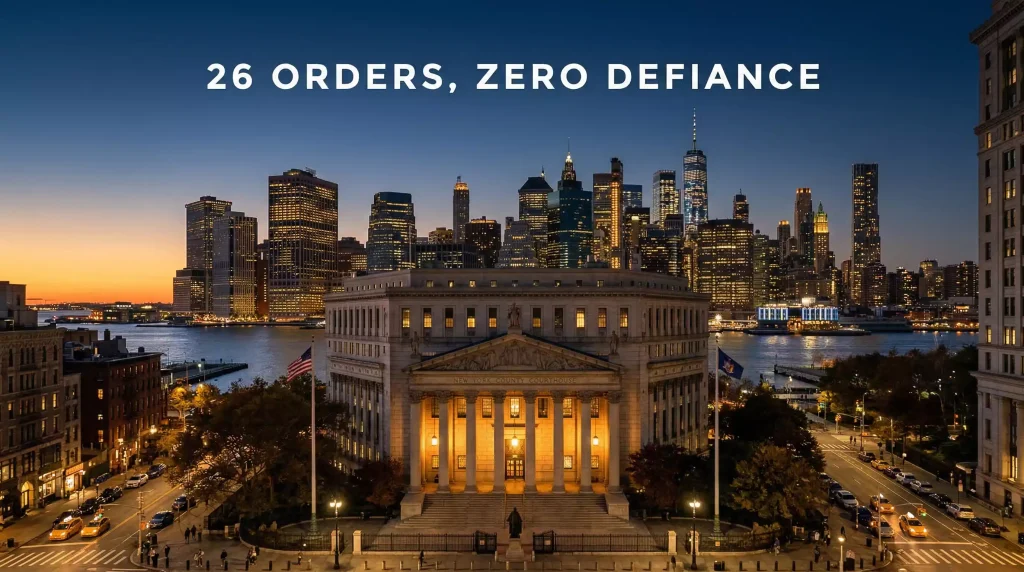
26 Orders, Zero Defiance: The AG’s Enforcement Campaign
The timeline was compressed and deliberate. In June 2026, AG James’s office issued cease-and-desist letters to 26 sweepstakes casino platforms simultaneously. The letters didn’t politely request voluntary compliance. They stated that the platforms were operating illegal gambling businesses under New York Penal Law and demanded immediate cessation of all sweepstakes coin sales to New York residents.
The legal argument rested on a straightforward reading of existing law. New York defines gambling as staking something of value on the outcome of a contest of chance with an agreement that the winner receives something of value. The AG’s office argued that Sweeps Coins — because they’re redeemable for cash — constitute “something of value” on both ends of the transaction. The sweepstakes industry’s standard defense — that players purchase Gold Coins (entertainment) and receive SC as a free promotional bonus — didn’t hold up under the AG’s interpretation. If the end result is that a player pays money, plays slots, and receives cash prizes, the intermediate steps are a legal fiction, not a legal distinction.
James framed the action in characteristically direct language, calling sweepstakes casinos “illegal, dangerous, and can seriously ruin people’s finances.” The characterization wasn’t rhetorical excess — it reflected data from the AG’s investigation showing patterns of player spending that resembled problem gambling behaviors, concentrated among demographics least equipped to absorb losses.
All 26 platforms complied. Every single one. No operator chose to fight the cease-and-desist in court, challenge the AG’s interpretation of state gambling law, or test whether New York would follow through on enforcement. The unanimous compliance reveals a calculation that operators had quietly made: the legal defense of the sweepstakes model is expensive, uncertain, and — in a jurisdiction as hostile as New York — likely to produce unfavorable precedent that could cascade to other states. It was cheaper to leave than to litigate.
The speed and completeness of compliance sent a signal far beyond New York’s borders. If 26 operators — including industry leaders with billions in revenue — wouldn’t fight a cease-and-desist from a single state attorney general, the sweepstakes industry’s legal position was more fragile than its marketing suggested.
From Cease-and-Desist to Permanent Law: SB 5935A
Cease-and-desist letters are enforcement tools, not legislation. They carry legal weight, but they can be challenged, withdrawn by a future AG, or undermined by a court ruling. New York’s legislature moved to eliminate that ambiguity. In December 2026, Governor Hochul signed SB 5935A, formally prohibiting sweepstakes casinos from operating in the state.
The distinction between the AG’s enforcement action and the legislative ban matters for several reasons. A cease-and-desist operates within the discretion of the AG’s office — a new attorney general could theoretically reverse the position. SB 5935A writes the prohibition into state statute, requiring a new law to undo it. The bill also establishes clear penalty provisions, defines sweepstakes casinos in statutory language that can be cited in future prosecutions, and removes the interpretive ambiguity that operators might have exploited in a legal challenge to the AG’s original letters.
The legislative process was streamlined by the AG’s prior action. By the time SB 5935A reached the floor, every major sweepstakes operator had already exited the state voluntarily. There was no active industry lobby fighting the bill, no operator-funded ad campaigns warning about job losses or revenue impacts, and no credible argument that the ban would disrupt an ongoing market — because the market was already gone. The AG’s enforcement had effectively served as a legislative rehearsal, proving that the prohibition was both enforceable and politically painless.
For the sweepstakes industry, the New York sequence established a playbook that other states could replicate: AG enforcement first, legislation second. The order matters because it demonstrates that states don’t need to wait for new law to act against sweepstakes casinos. Existing gambling statutes, in many jurisdictions, already provide the legal basis for enforcement. The legislation that follows is less about creating new authority than about making existing authority permanent and unambiguous.
What Happened to the Players
When 26 platforms simultaneously stop accepting purchases from your state, the practical impact on players is immediate and disorienting. One day you’re spinning slots with a balance of 200 SC; the next, the purchase button is grayed out and a banner informs you that services are no longer available in your jurisdiction.
Most operators offered a transition window — typically 30 to 60 days — during which New York players could redeem existing Sweeps Coin balances through standard KYC and withdrawal processes. Players who had already verified their identity generally experienced relatively smooth cashouts, though processing times stretched as platforms handled a surge of simultaneous redemption requests. Players who hadn’t completed KYC verification faced a more stressful timeline: gathering documents, submitting verification, and hoping the process completed before the redemption window closed.
The hardest hit were players with balances below the minimum redemption threshold. If you held 30 SC on a platform with a 50 SC minimum, you had no mechanism to cash out. Some operators made one-time exceptions during the transition, lowering minimums or processing sub-threshold redemptions as a goodwill measure. Others did not. Gold Coin balances — which were never redeemable — simply vanished with access to the platform.
New York Assemblywoman Carrie Woerner captured a broader concern when she described sweepstakes games as a potential “on-ramp to problem gambling for teenagers, particularly.” The player impact extends beyond financial losses on stranded balances. For players who had developed regular spending habits on sweepstakes platforms — and AGA data shows that 80% of paying users spend monthly — the sudden removal of access forced an abrupt break in behavior patterns. Whether that interruption was beneficial or disruptive depends entirely on the player’s relationship with the product.
The lesson from New York isn’t that players should avoid sweepstakes casinos. It’s that state-level regulatory risk is real, immediate, and currently accelerating. Players in states without explicit bans should maintain redeemable balances they can cash out on short notice, complete KYC verification proactively rather than waiting for a withdrawal request, and treat any SC balance as an asset that could become inaccessible without warning. The 26 operators who left New York didn’t give months of advance notice. They received a letter and they left.